

There is a moment in every young festival when it stops being an announcement and becomes an institution. It usually arrives with the second edition. The first is a declaration of intent; the second is the proof — that the artists will come back, that the audience was not a one-off, that a city has decided what kind of place it wants to be.
Baku's second International Arts Festival makes that case over twelve days, across eleven core productions and a parallel programme that spills out of the theatres and into cinemas, museums, courtyards and streets. It brings Akram Khan and Crystal Pite, William Kentridge and Romeo Castellucci, English National Ballet and Les Ballets de Monte-Carlo, Maxim Vengerov and David Garrett, Lev Dodin and Dmitry Krymov, Lukas Geniušas and Dmitry Sitkovetsky to a single city on the western shore of the Caspian.
Few festivals anywhere assemble that range in a fortnight. Almost none do it in a city that, until recently, was not widely known on the international performing-arts circuit — certainly not at this scale.
A city built on the seam
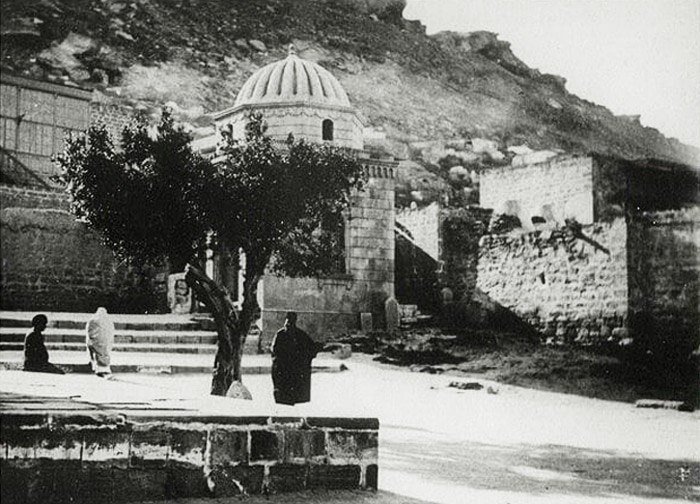
Baku has always been a place where directions meet rather than a place at the end of one of them. It sits on the Absheron peninsula, at the narrowest point of the corridor between the Caspian and the Caucasus range — the pinch through which caravans, armies, ideas and, latterly, pipelines have had to pass. The walled Old City, Icherisheher, still contains the caravanserais where merchants stabled their animals; the Shirvanshahs' Palace and the Maiden Tower stand within a few minutes' walk of one another, and of the Zoroastrian fire that gave the country its name. The roads out of these gates ran to Multan and Bukhara, to Tabriz, Baghdad and Damascus, to Istanbul and on to Venice — and medieval Baku was a centre of Sufi learning on that network, a station of the Khalwati order whose scholar Seyid Yahya Bakuvi lies buried inside the palace grounds, a few steps from the Shahs' own.
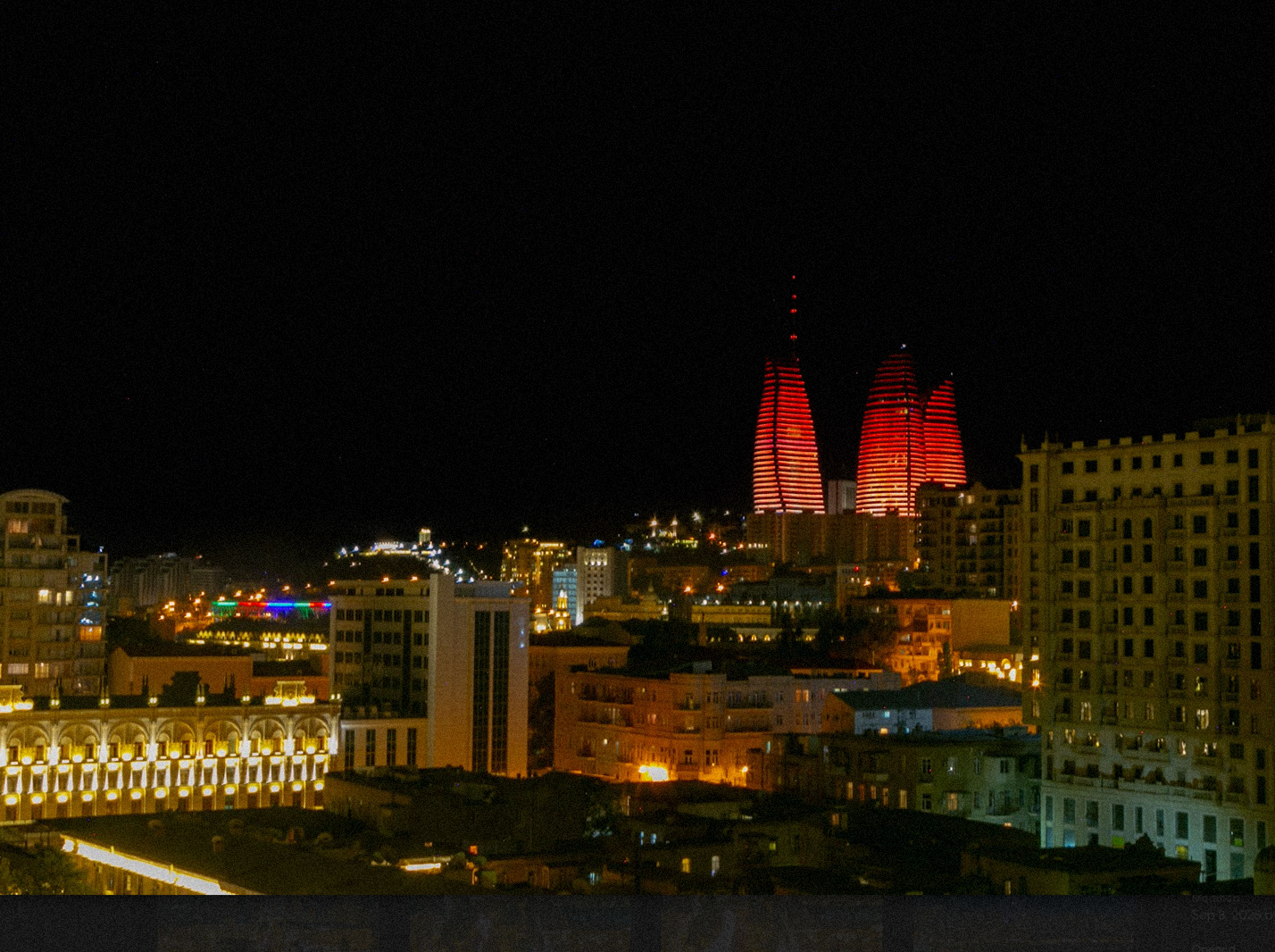
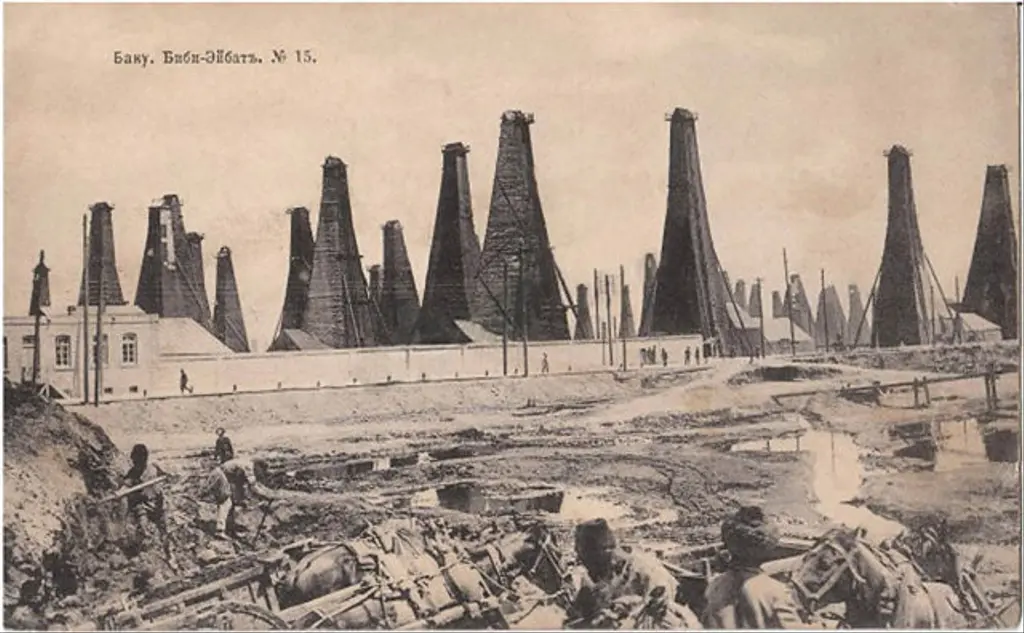
What followed was not a slow provincial history but a series of violent accelerations. The oil boom of the 1870s turned a fortress town into one of the most cosmopolitan cities in the Russian Empire — by 1900 Baku was producing roughly half the world's oil, and its wealth built mansions in every European style along the seafront. Azerbaijanis, Russians, Persians, Jews, Germans, Poles, Georgians and Armenians lived and worked in the same streets.
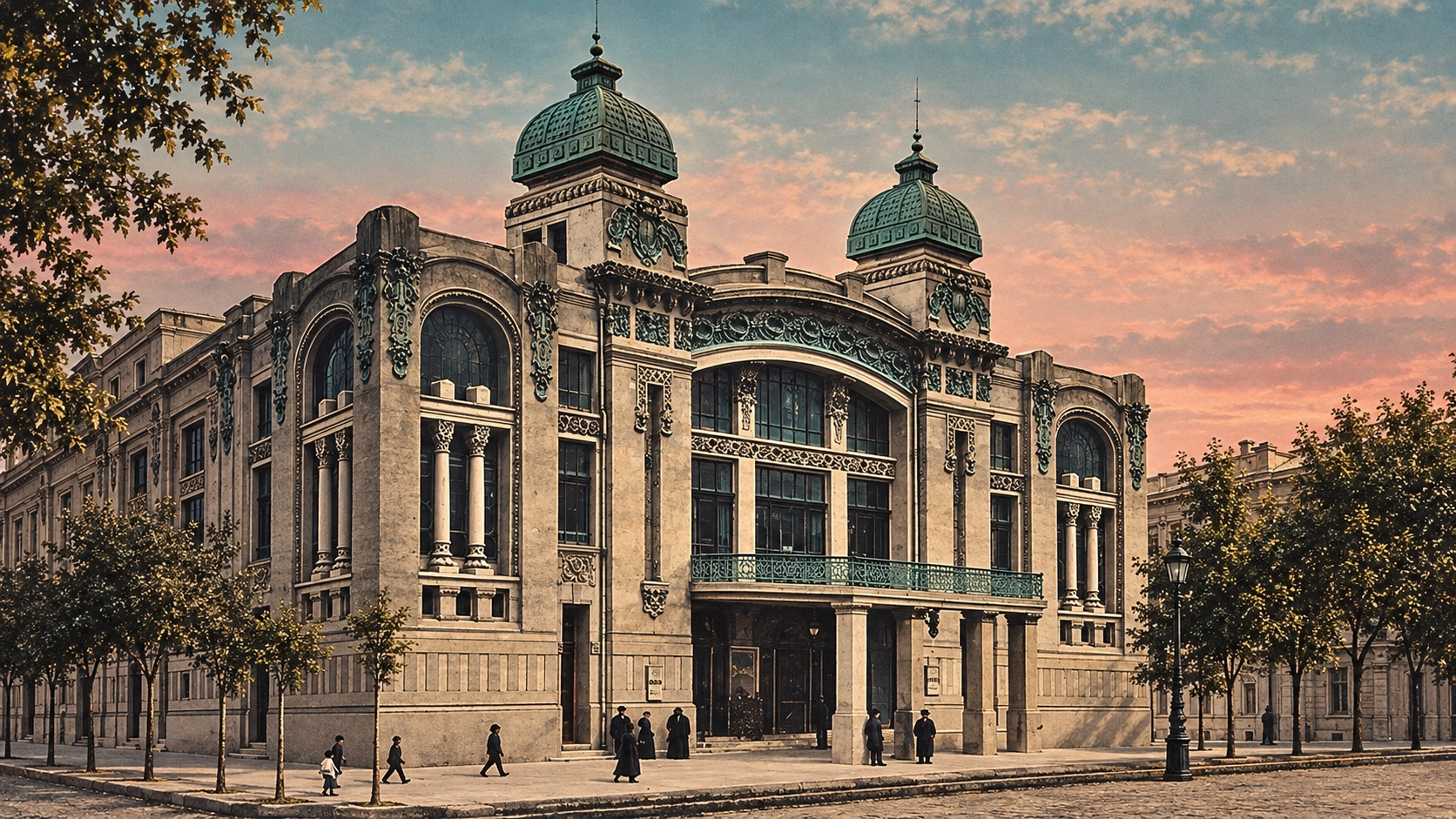
The opera house came out of the same money and a better story: the Mailov brothers, caviar magnates with fisheries on the Kura, put it up in under a year after a visiting soprano — the name attached to the story is always Antonina Nezhdanova — remarked that she could hardly return to a city with no proper opera house. It opened in February 1911 with Boris Godunov, and the elder Mailov is supposed to have presented her with a wreath woven out of banknotes. The building is the Azerbaijan State Opera and Ballet Theatre today, and the dancers who appear in Binyamini's Boléro this autumn are its own.
The layers run deeper than the oil. The Christian kingdom of Caucasian Albania held this territory from antiquity and adopted Christianity in the fourth century, among the earliest states anywhere to do so; its churches still stand in the north, and its descendants, the Udi, still live at Nij.
Along the Caspian above them lay the Khazars, whose ruling house — by the medieval accounts — weighed the three monotheisms against one another and chose Judaism, the improbable episode behind Judah Halevi's Kuzari. They have kept their hold since: Lev Gumilev spent years in the Caspian lowlands hunting for their vanished cities and wrote The Discovery of Khazaria out of the search, a book whose conclusions historians still dispute.
The Mountain Jews have been in these mountains for close to two millennia, and their town is still there: Qırmızı Qəsəbə, the Red Town, Krasnaya Sloboda in Russian, across the river from Quba — founded in the eighteenth century under the protection of the khan, who wanted its craftsmen and traders and offered them a place to live without fear, and generally reckoned the last all-Jewish town outside Israel. Its nineteenth-century Karchog synagogue is now the only museum anywhere devoted to Mountain Jewish life.
Synagogues, Orthodox and Catholic churches and mosques still operate within a few blocks of one another, and Azerbaijan has made that coexistence explicit policy rather than happy accident.
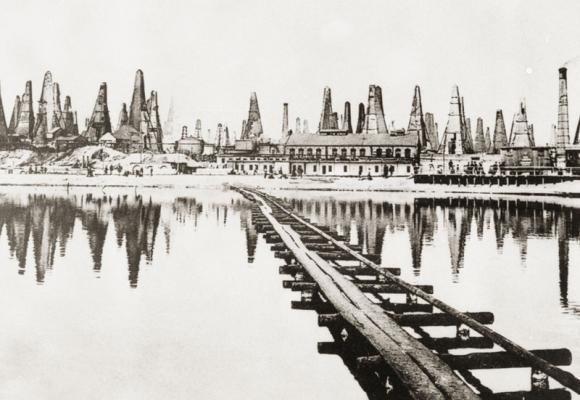
The city has a habit of being first. Haji Zeynalabdin Taghiyev, an illiterate mason who became one of the richest men in the empire, built Baku's first theatre in 1883 — and it was on that stage, in 1908, that Uzeyir Hajibeyli's (formerly rendered as Uzeyir Hajibeyov) Leyli and Majnun became the first opera composed in the Muslim East. Taghiyev's own life reached the screen in 2024, a century after his death, in Zaur Gasimli's Tagiyev: Oil, written with Ismail Iman — which went on to become the most-watched Azerbaijani film ever released in the country's cinemas and has since grown into a series of four.
The first ballet followed in 1940. In between, on 28 May 1918, the Azerbaijan Democratic Republic was proclaimed here: the first parliamentary democracy in the Muslim world, secular, with an assembly that seated Russian, Jewish and Armenian deputies, and which gave women the vote in its founding year — ahead of Britain's full franchise and of the United States. It lasted twenty-three months. It is a short history, and it is the one the country dates itself from.
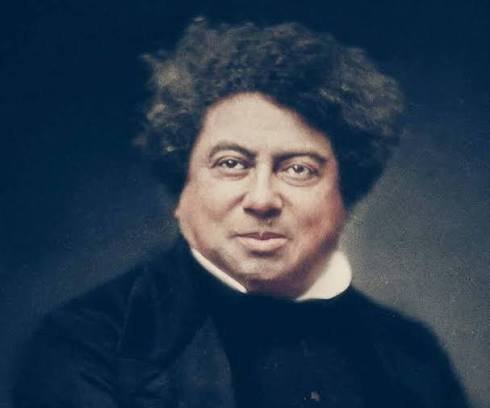
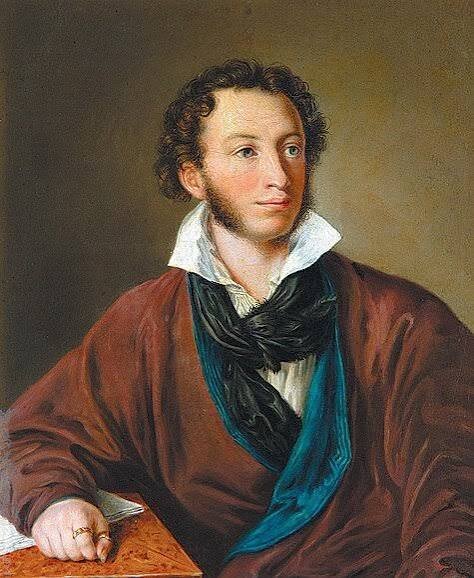
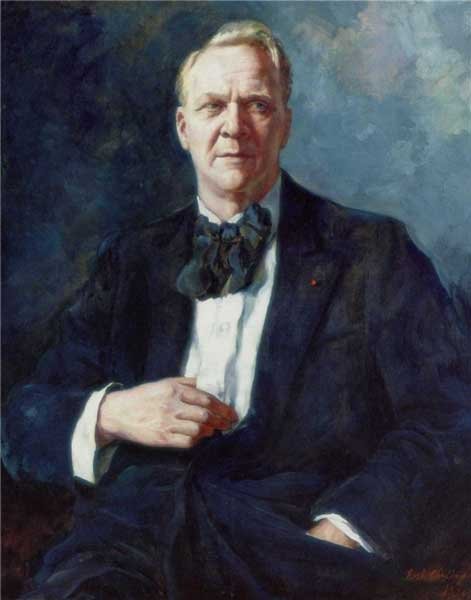
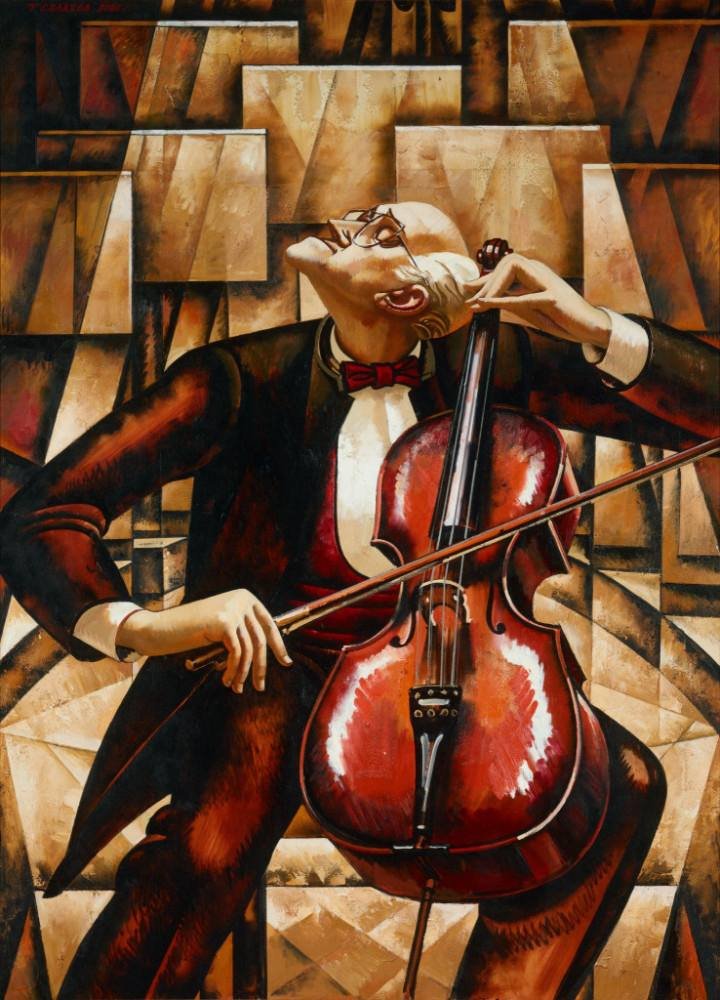
The city's roll call is improbably rich. Alexandre Dumas arrived in 1858 on his Caucasus journey and went out to Surakhany to see the eternal flames of the fire temple. Chaliapin sang here. Yesenin spent the last summers of his life on the Absheron and wrote his Persian Motifs in Baku and Mardakan — a Persia he never reached, imagined from this shore. The region had been supplying Russian writers with an East to imagine for a century by then: Pushkin's Shamakhan Queen, the enchantress who arrives out of the East in The Golden Cockerel and leaves a kingdom in ruins, takes her name from Shamakhi, the old capital of Shirvan up the road from Baku — and Rimsky-Korsakov made an opera of her. Mayakovsky came for the derricks and the noise of the new world, and turns up again this autumn as a character in Kentridge's film. Richard Sorge, the most consequential spy of the century, was born just outside the city in 1895, the son of a German oil engineer. Mstislav Rostropovich was born here in 1927 and went on to study composition with Shostakovich, who wrote both cello concertos for him. Lev Landau, the theoretical physicist whose textbooks every Soviet physicist grew up on, was born here in 1908. Bella Davidovich, still the most celebrated pianist the city has produced, grew up in a family of Ratner musicians attached to the opera house across three generations — her grandfather Isaac and her mother Lusya both worked there — and played a Beethoven concerto with an orchestra in this city at nine; when she took first prize at the Chopin Competition in Warsaw in 1949, at twenty-one, Bakinsky Rabochy — the Baku Worker — announced the win as a Baku girl's. The Philharmonic carries the name of the composer Muslim Magomayev, whose grandson and namesake became the most famous voice in the Soviet Union.
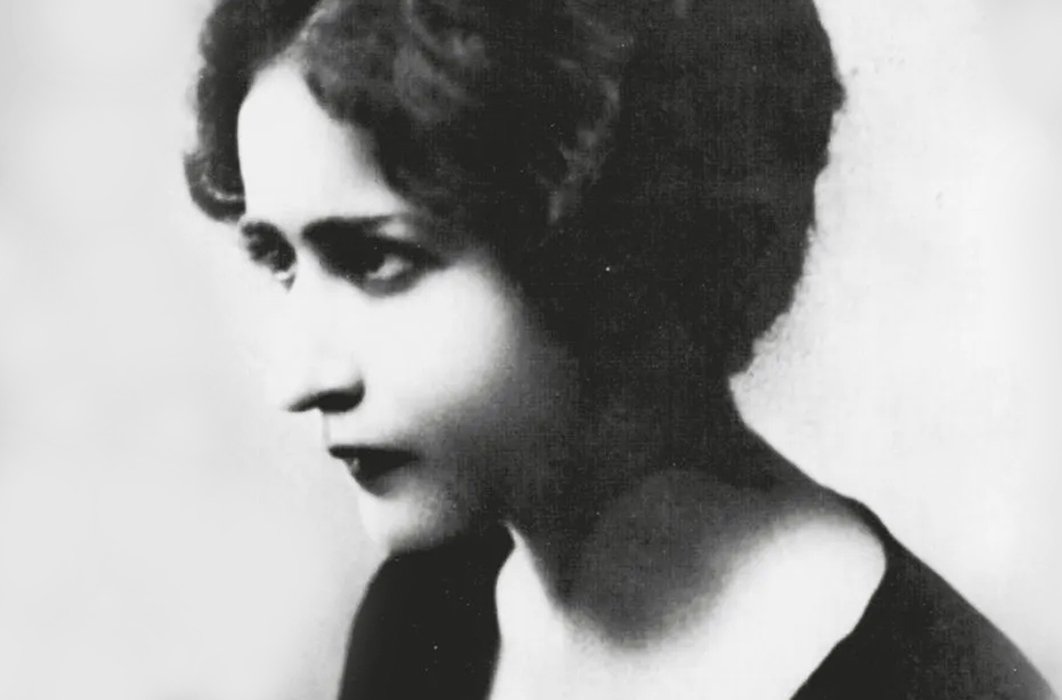
Banine was born here too — Umm-El-Banine Assadoulaeff, daughter of a minister of the 1918 republic and granddaughter of two oil millionaires — who lost the fortune to the revolution, modelled in Paris, and wrote Days in the Caucasus about the childhood she had fled.
She met Ivan Bunin in June 1946: he was seventy-five and the only Russian writer with a Nobel Prize; she was forty-one. His first letter, two days later, thanked her for her attention and then corrected a factual error in her book. The correspondence ran until his death in 1953 and was a storm — quarrels, accusations of coldness and egotism, breaks and resumptions — and twenty years later she wrote it down as The Last Duel of Ivan Bunin.
Soviet cinema, meanwhile, used the Old City as a film studio. Icherisheher played Istanbul in The Diamond Arm, the most popular comedy the USSR ever made — the slip on a melon rind that produced a national catchphrase was filmed on Kichik Gala street, now a small pilgrimage site — and Tehran in Tehran-43, while the crew of Amphibian Man built a fountain on one of its little squares for Ichthyander to dive into. Baku also wrote for the screen: Rustam Ibragimbekov, later an Oscar winner for Burnt by the Sun, co-wrote White Sun of the Desert, the film Russian cosmonauts have watched together before every launch for half a century. And in 1999 James Bond came for the oil, The World Is Not Enough filming at the Bibi-Heybat field and out at Oil Rocks, the Soviet city built on stilts in the Caspian. A city that spent the twentieth century impersonating everywhere else has some practice at hosting the world.
Its own great myth is a love story about exactly this seam. Ali and Nino, published in Vienna in 1937 under the pseudonym Kurban Said, is a novel about a Muslim boy and a Christian girl, and about a city that belongs to neither Europe nor Asia and is therefore obliged to invent itself. Its author's life tells the same story twice over. He was born Lev Nussimbaum in 1905 — the birthplace itself is disputed — into the oil boom: his father a magnate, his mother a revolutionary said to have helped finance the Bolshevik underground in Baku, Stalin among them. In 1920 the family fled through the Caucasus and Constantinople, and by 1921 he was in Berlin, at the Russian gymnasium for the children of the emigration, sharing a classroom with the sisters of Boris Pasternak and Vladimir Nabokov.
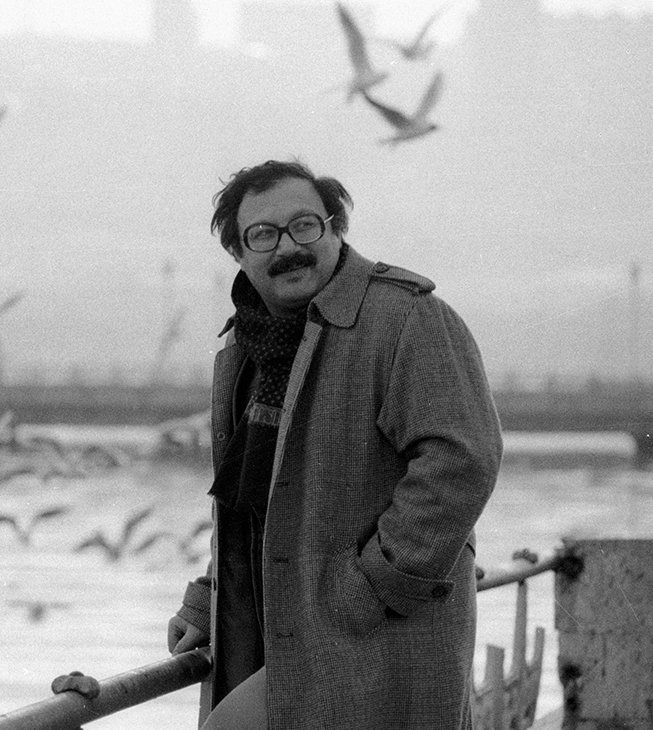
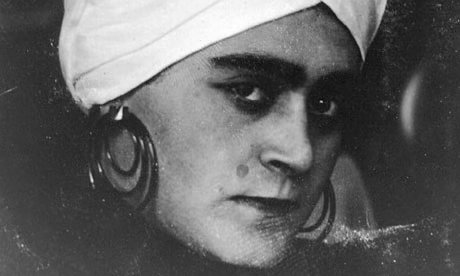
In August 1922, at the Turkish embassy in Berlin, he converted to Islam and became Essad Bey: turban, Ottoman title, invented aristocracy — and then made the invention work. Some sixteen books followed in barely a decade, among them a memoir of Baku, a biography of Stalin, a life of the Prophet Mohammed that has never gone out of print, and a life of Nicholas II.
Tom Reiss's The Orientalist gave the phenomenon its name: a Jewish orientalism, a Weimar generation of Jews who, as Europe closed around them, turned to the Islamic East for refuge and identity. It did not save him. Banned from publishing in the Reich once his origins were exposed, he moved to Vienna and then, in 1938, over the Alps into Italy, and died in Positano in 1942, aged thirty-six. A Jewish boy from Baku who made himself a Muslim prince in order to survive Europe, and wrote the novel Azerbaijan now regards as its own.
Why this festival, why now
The wider context is unmistakable. Today the old geography has acquired new force: trade and transport are again moving across the Caspian between Central Asia, the Caucasus and Europe, making Baku a hinge in the renewed Middle Corridor. Culture is following the same map. From Istanbul and Tbilisi to Tashkent, Samarkand and the Gulf, festivals, museums and biennials are creating a new circuit along the old Silk Roads — which happens to be the argument of the historian who will give a public talk here in November.
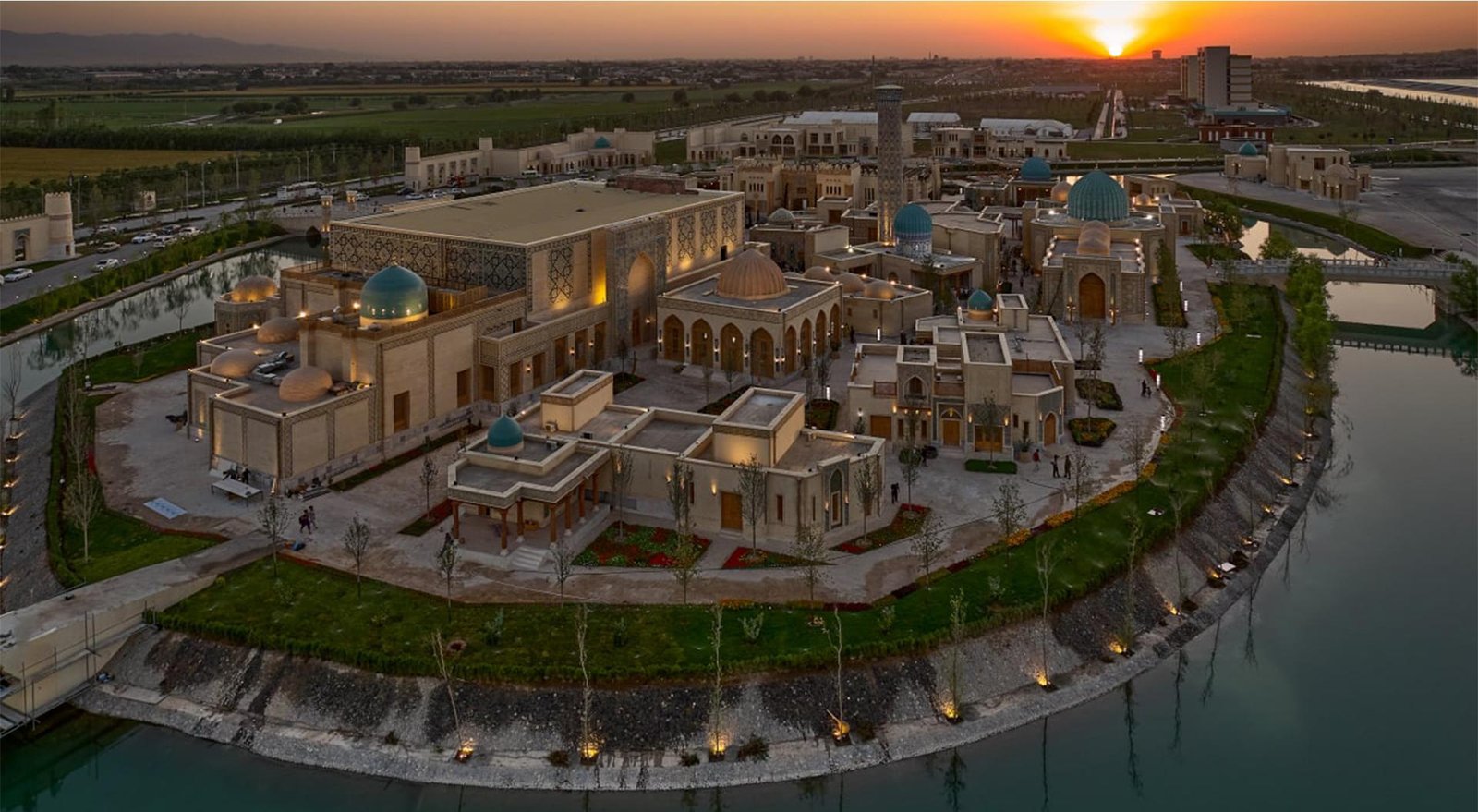
Baku's position on that circuit is not merely central; it is the crossing point, where the east–west line from Istanbul to Samarkand meets the north–south one from Moscow to Tehran and the Gulf. And what it offers is more specific than money and a new hall: it offers common ground.
Look at the second edition's roster and you will find companies from Jaffa and St Petersburg, from Tbilisi and from London, from Monte-Carlo and from Johannesburg, appearing within days of each other on the same stages, before the same audience.
Few cities could bring that particular group of artists together with such naturalness. In a season when much of the world is sorting itself into camps, that is an important statement — made not in a communiqué, but in repertoire.
Multigenre by design
Begin with the shape of the thing. BIAF is a multigenre festival: classical music, dance and drama in a single programme, with cinema, visual art, talks and walks around them. That is the form the great European festivals take — Salzburg, Aix-en-Provence, the Ruhrtriennale — and it is a deliberate choice against the alternative, which is to specialise. It buys two things nothing else buys. An audience that arrives for one art form and leaves having seen three. And a programme in which a symphony, a marionette play and a Forsythe ballet stand close enough together to comment on one another across a fortnight.
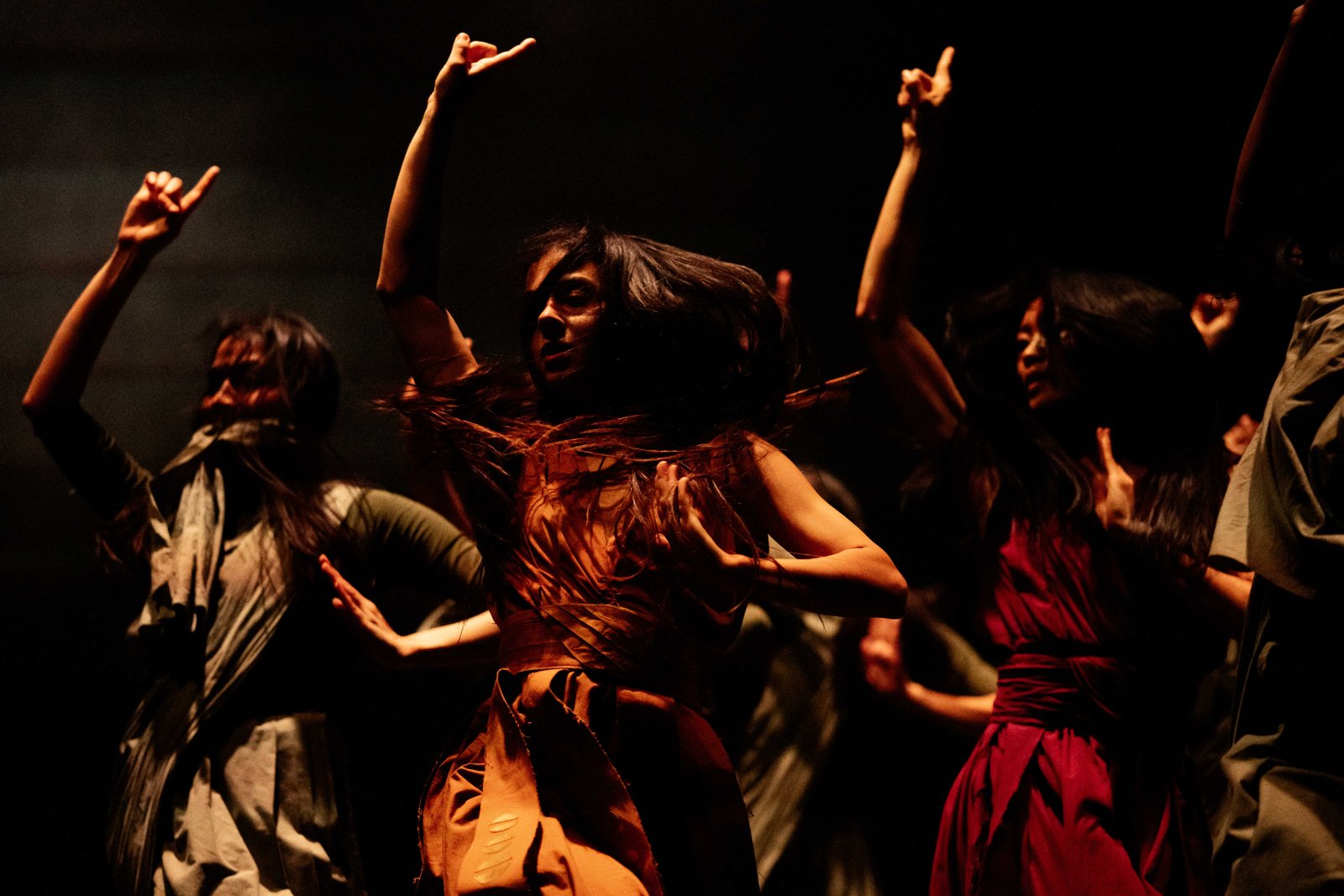

A second principle runs through the selection within that shape: the individual works do not sit inside single genres either. Kentridge is a film played live against a symphony orchestra. Thikra is a choreographer and a visual artist as joint authors, commissioned by a land-art programme. Castellucci makes an installation whose sound is generated from human hair, and stages it in a museum.
A festival that programmes only by genre risks missing the most interesting work being made between disciplines — and the argument has a particular authority here. Fusion is not an imported curatorial fashion in Baku but a description of how the place has always worked: mugham inside European operatic form, a national school taught in a Moscow classroom and brought home, and jazz-mugham, which Vagif Mustafazadeh invented at a piano in the 1960s by fusing the improvisational logic of mugham with the harmonic language of jazz. His daughter Aziza took it worldwide.
The festival is not introducing the city to the idea of crossing forms; it is programming to a local strength.
Shostakovich at 120
The musical thread is anchored to a single anniversary. Dmitri Shostakovich was born in September 1906; 2026 is his 120th year, and the festival treats him not as a commemorative obligation but as the century's most useful witness — the composer who worked out how to speak in public and in private at the same time.
What is less widely known outside Azerbaijan is how much of a Baku figure he is.
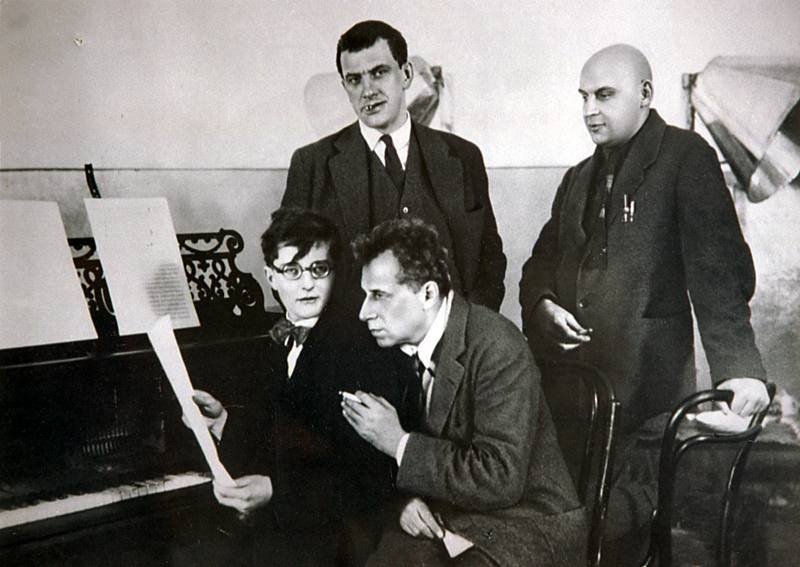
He first came in the summer of 1934, aged twenty-seven, already notorious for Lady Macbeth of the Mtsensk District and not yet condemned for it. He stayed over a week, appearing within the Moscow Philharmonic's summer season under Alexander Gauk: the First Symphony, the suite from the ballet The Bolt, and the piano concerto with the composer himself at the keyboard. Gauk, by then a regular visitor, remarked that Baku was the only city in the Soviet Union that carried on through the summer the work Moscow and Leningrad did in winter. Those concerts began his lifelong association with Azerbaijani musicians.
The opening concert at the Philharmonic Hall consciously echoes that evening from ninety-two years ago. Lukas Geniušas — grandson of Vera Gornostaeva, who taught piano at the Moscow Conservatory for half a century — and Tine Thing Helseth play the Concerto for Piano, Trumpet and Strings, Shostakovich's First, written in 1933: circus turns, silent-film chases and sudden unguarded lyricism. It is the same concerto the composer played in this city in 1934, months after the ink was dry. Its two initially antagonistic voices ultimately become partners — an apt opening gesture for a festival founded on encounter.
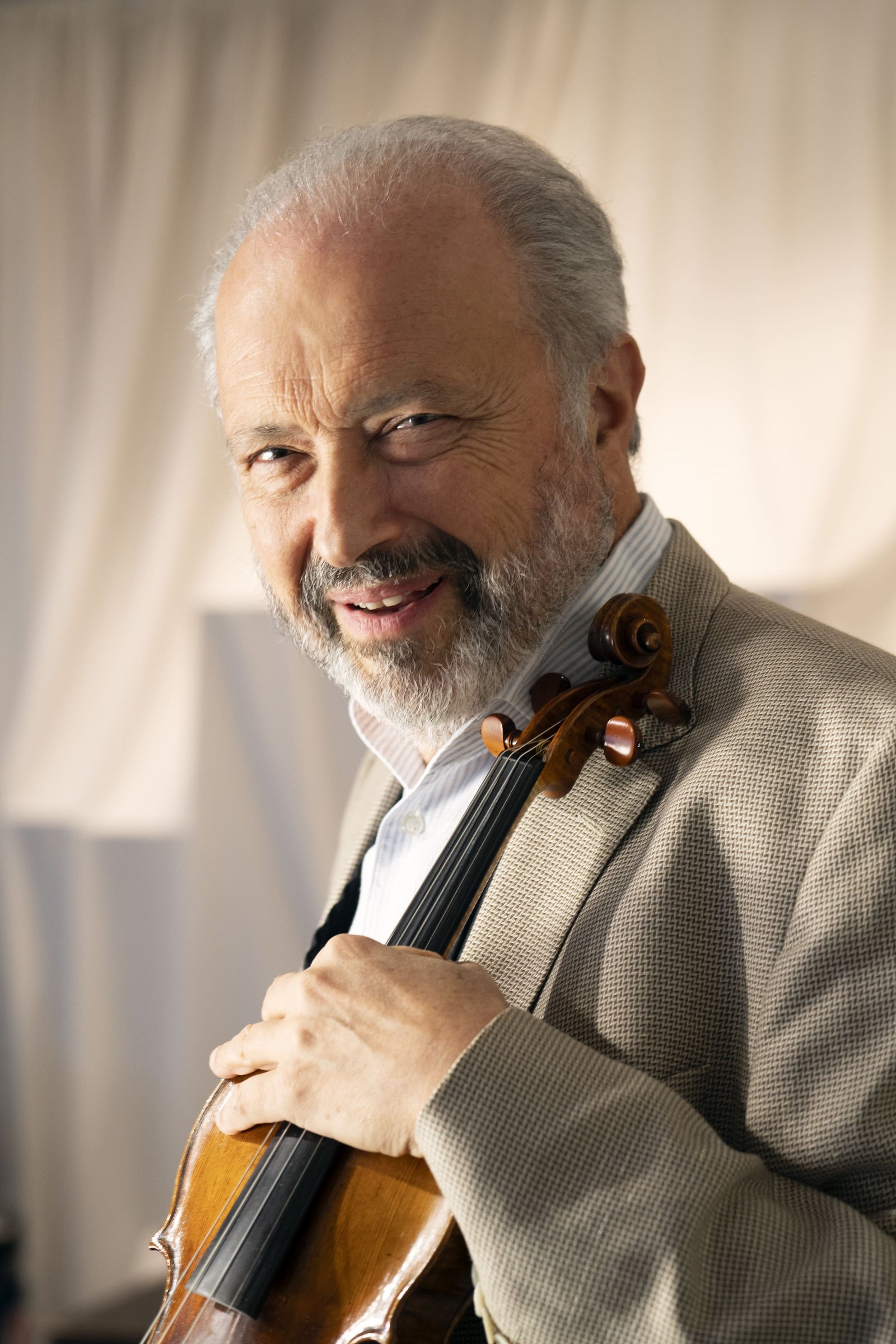
Nor is the conductor accidental. Dmitry Sitkovetsky was born in Baku in 1954, the son of the violinist Julian Sitkovetsky and of Bella Davidovich. After leaving the Soviet Union at twenty-two, he built an international career as violinist, conductor and transcriber, and later founded a biennial festival in his native city. He returns to open this edition and to conduct the Tenth Symphony beneath Kentridge's film. He also assembles the festival orchestra: Baku's own chamber and symphony players together with invited international musicians, brought together for the occasion — the guest principle applied inside the pit rather than only on the stage.
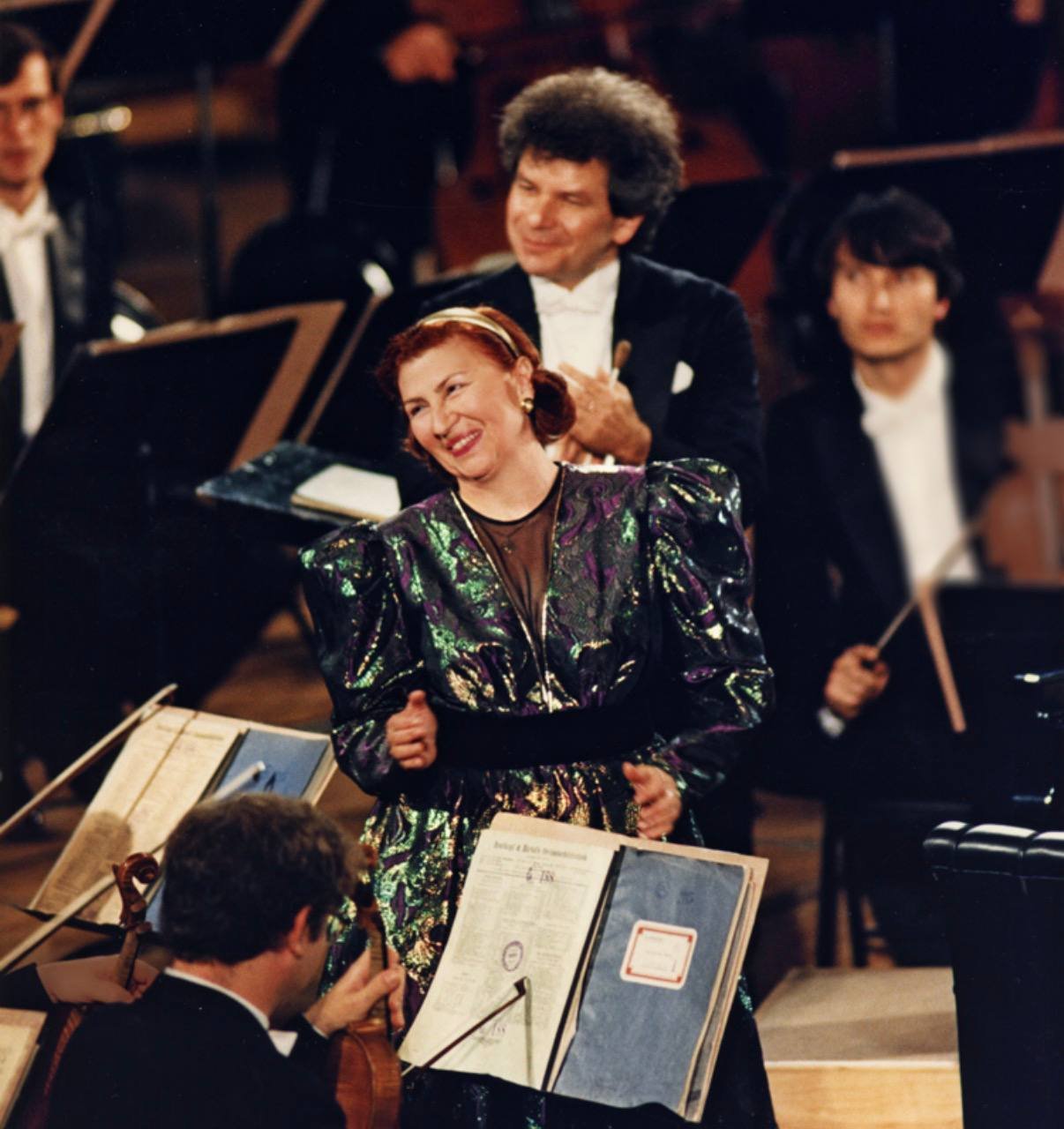
Shostakovich's association with the city became a school. Gara Garayev and Jovdat Hajiyev — the two composers who between them define twentieth-century Azerbaijani music — studied composition with him at the Moscow Conservatory in the 1940s, and the teacher-student relationship turned into a friendship that lasted until his death. Uzeyir Hajibeyli had already performed the founding act in 1908; what Shostakovich supplied was the next step, the technique and the licence for a national school to become a modern one. Garayev's Seven Beauties (1952), after Nizami, did for Azerbaijani ballet what Hajibeyli had done for opera. Shostakovich came back in 1949, in 1952 to hear Seven Beauties and to play his own music at the Philharmonic, and in 1956 for the republic's first congress of composers; he was made a People's Artist of Azerbaijan. He called Garayev his son, and Garayev's own pupils in Baku — Arif Melikov, Franghiz Ali-Zadeh, Faraj Garayev and Polad Bulbuloghlu among some seventy composers — his grandchildren.
That last name closes a circle of its own: Polad is the son of Bulbul, the tenor who founded the Azerbaijani vocal school and spent his life preserving mugham and ashiq song. Many of the composers working in Azerbaijan today trace a teaching line back to that classroom.
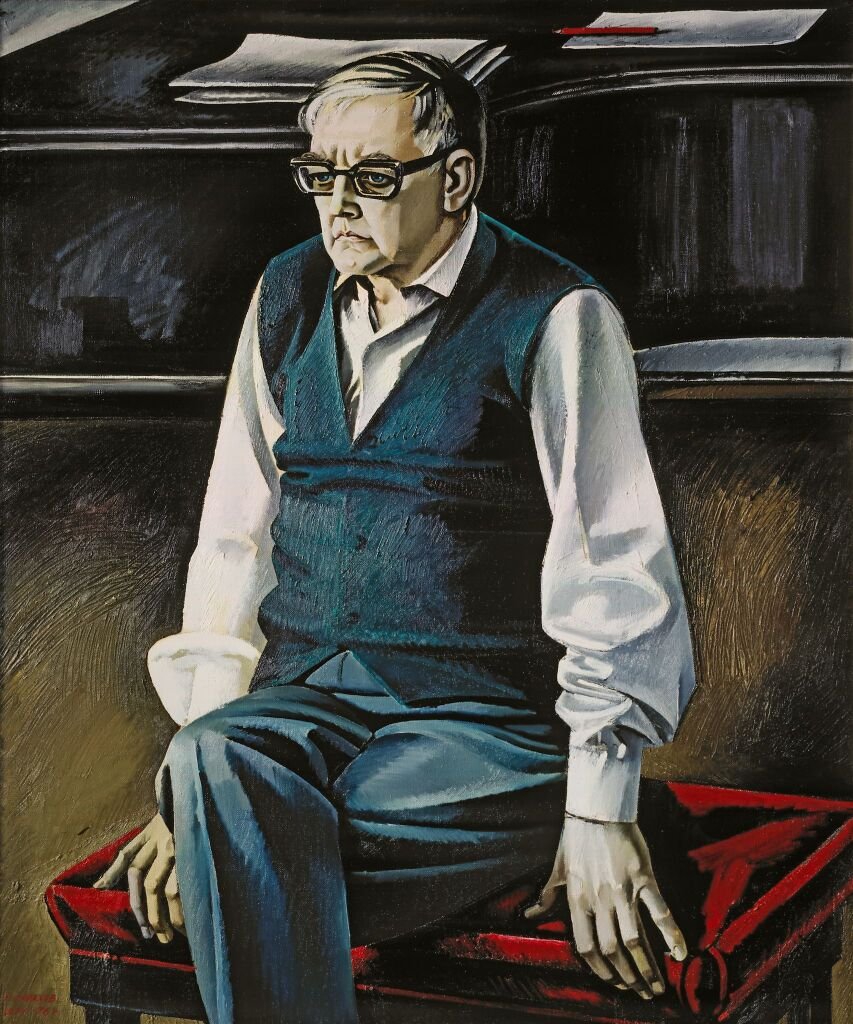
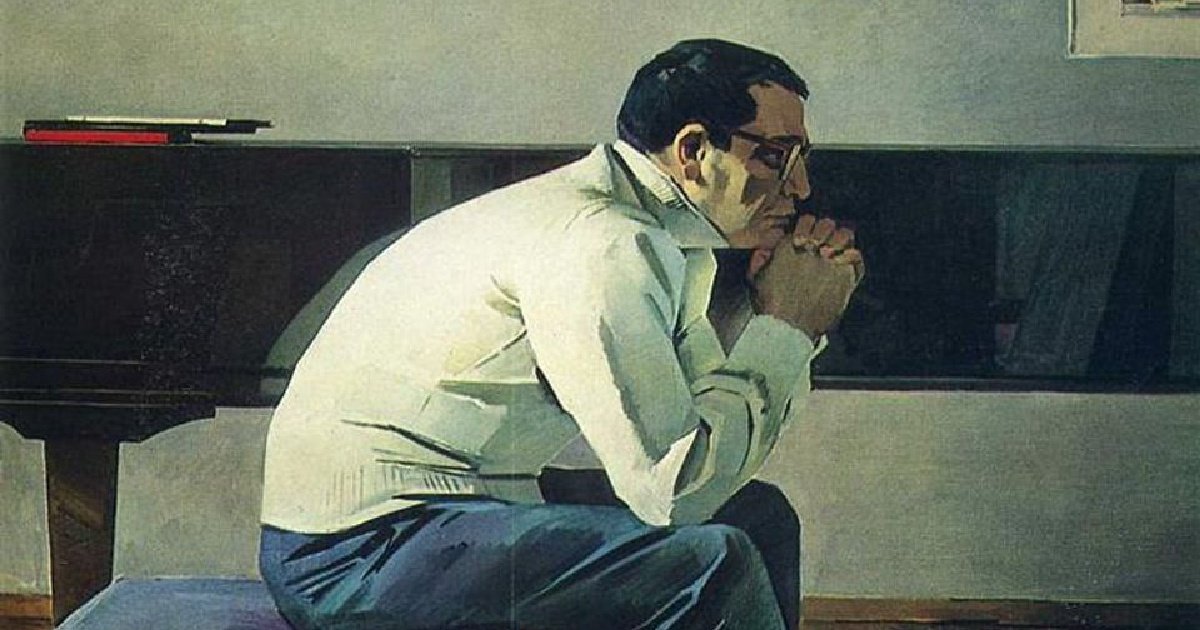
The lineage reaches the walls as well. Tahir Salakhov, the Baku painter who was among the pioneers of the severe style that broke with the varnished art of the Stalin years, made his name in 1960 with a portrait of Gara Garayev. Shostakovich saw what Salakhov had done with his student, and agreed to sit for him — an exception, since by the 1970s he was gravely ill and rarely consented to anything of the kind. Salakhov waited half a year for the composer to find the time and the strength, and worked on the canvas from 1974 to 1976. What he produced was not what the authorities had in mind: an official from the Central Committee is said to have remarked that he would rather not see Shostakovich looking like that. It hangs in the Tretyakov, and it is the portrait everyone now reproduces. Salakhov's daughter Aidan is among the artists showing in the city this autumn.
And one name from that classroom is written into the music itself. William Kentridge's Oh To Believe in Another World, screened at the Nizami Cinema against the Tenth Symphony played live under Sitkovetsky, is the South African artist's cardboard-and-shadow answer to the most argued-over symphony of the Soviet century — a film built from junk-model sets, torn paper and stop-motion, populated by Shostakovich, Mayakovsky, Lilya Brik and Stalin, moving through a revolution that eats its own.
The Tenth carries the composer's DSCH monogram; it also carries, in the third movement, a horn call spelling out the name Elmira — Elmira Nazirova, the Azerbaijani pianist and composer, his student in Moscow, who returned to Baku and to whom he wrote a stream of letters in the summer of 1953. The programme pairs the film with the Concerto on Arab Themes that Nazirova wrote with Fikrat Amirov, played by Farhad Badalbeyli — who knew both composers personally — under the baton of Fuad Ibrahimov. This is not a borrowed anniversary. The Tenth Symphony has a Baku address inside it, and the man at the piano is a living link to it.
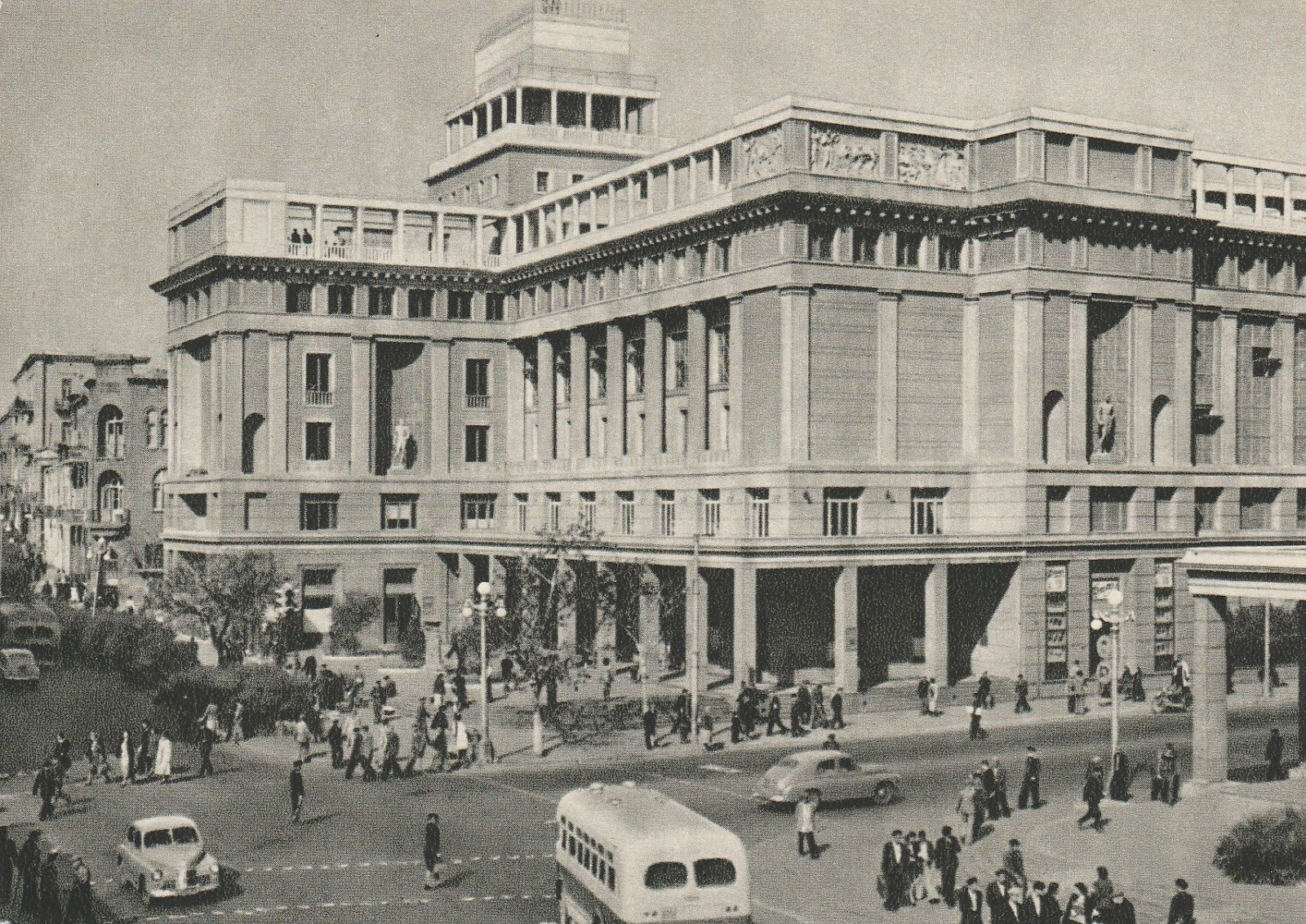
The venue completes the circuit. The Nizami was designed in 1934 and opened in 1940 as the largest cinema in the Soviet Union — a Stalinist picture palace begun in the very year of Shostakovich's first Baku concerts and finished across the years of the Terror that Kentridge's film depicts. A revolution devouring its own will be screened inside a monument raised by the machine that did the devouring. The Tenth, for its part, was written in 1953, the year Stalin died.
Drama: one school, three cities
The theatre programme looks at first like three unrelated imports. It is closer to a family portrait taken after a dispersal. All three companies descend from the same tradition — the Russian and Soviet school of ensemble psychological theatre — and each represents a different fate that tradition has met.
Lev Dodin's The Seagull arrives at the Musical Theatre from the Maly Drama Theatre — Theatre of Europe, the company Dodin has spent half a century building into one of the last true ensembles, in the city where that school was invented. Chekhov here is not a period piece but a laboratory: people who want to make art, people who want to be loved, and the discovery that these are not the same appetite. And The Seagull is, of all plays, the one about what a second generation owes the first — Konstantin demanding new forms, Arkadina defending the old ones, both of them wrong and neither of them ridiculous. A festival in its second edition could hardly programme a more self-aware text.
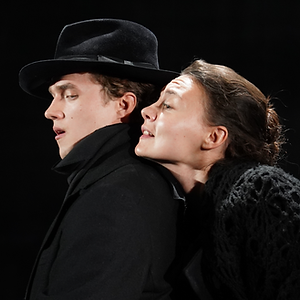

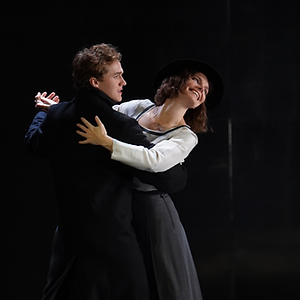
Dmitry Krymov's Bloody Mary, with Gesher Theatre, brings back a company that made a considerable impression here last year with Anna Karenina. Gesher was founded in Jaffa in 1991 by theatre people who left Moscow — the Russian school transplanted whole to the Mediterranean, and bilingual ever since. Krymov, son of the director Anatoly Efros and the critic Natalia Krymova, is a designer by training who builds performances out of objects, images and the visible mechanics of pretending, and who has spent recent years working outside Russia. The tradition that stayed and the tradition that left are both in this programme, four days apart.


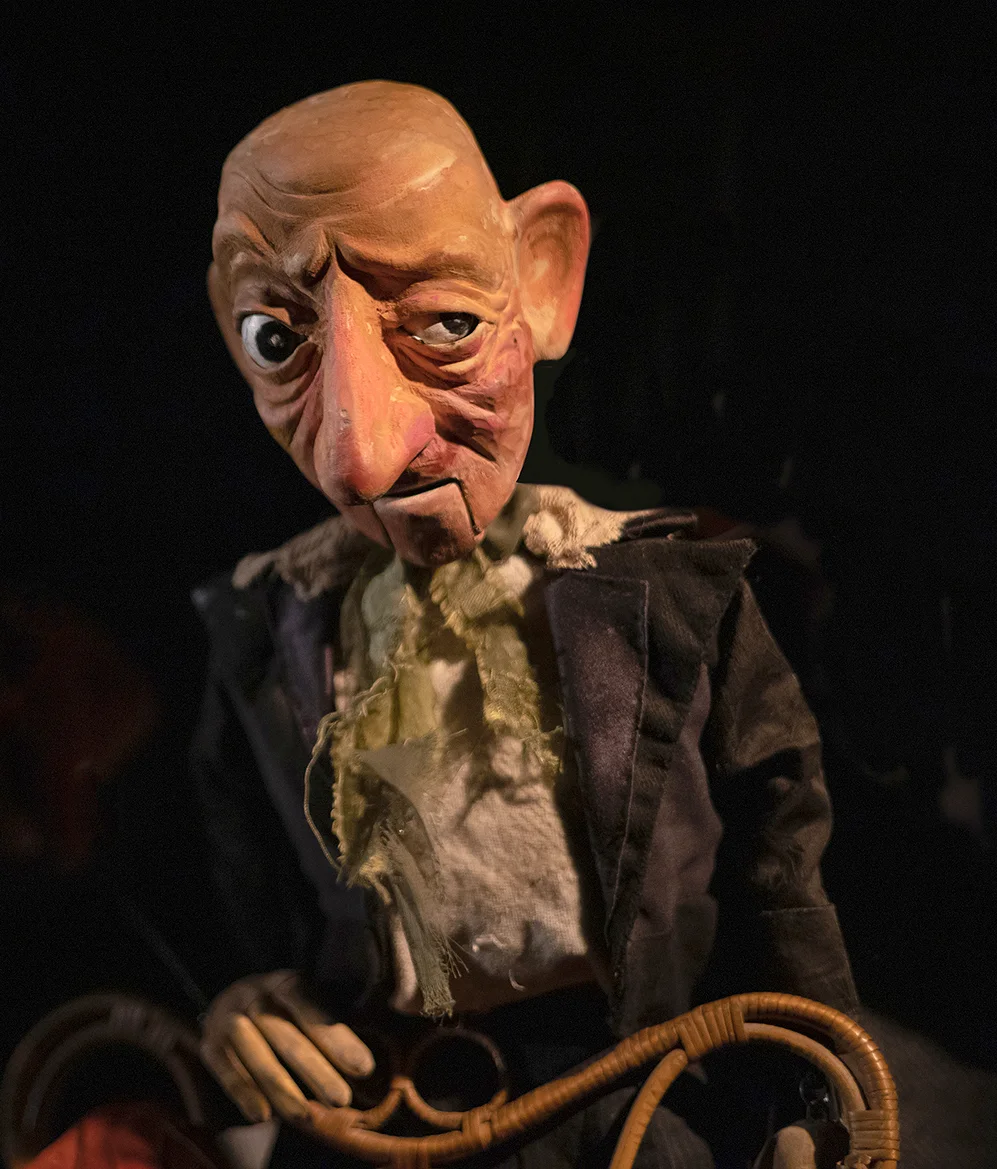
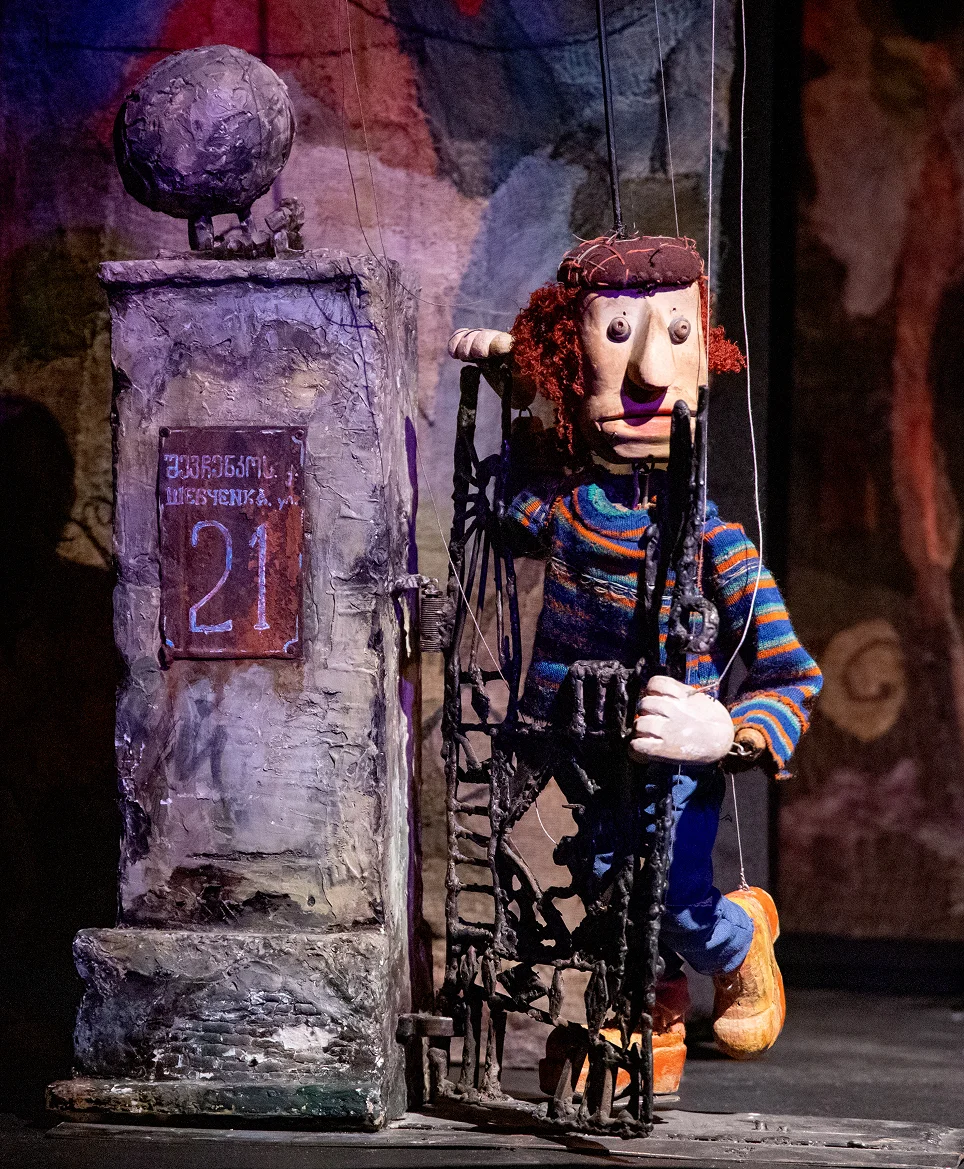
The Rezo Gabriadze Marionette Theatre's Alfred and Violetta occupies the multifunctional space of the Heydar Aliyev Center on 3 and 4 November, and supplies the third fate: the same century of loss, rendered in miniature by a Tbilisi master. Gabriadze, who died in 2021, made puppets the size of a forearm carry war, exile, love and the loss of everything, with a tenderness and a Georgian comic irony no human actor has quite reproduced. Much of the former Soviet Union knows his lines without knowing his face: he wrote or co-wrote Mimino, Kin-dza-dza! and Don't Grieve!, quoted at kitchen tables to this day. The man who gave a superpower its catchphrases spent the rest of his life working on a stage the size of a table. Set the three productions side by side and you get an unplanned essay on theatrical illusion: Dodin conceals the machinery entirely, Krymov exposes it on purpose, Gabriadze hangs it on visible strings — and all three produce the same catch in the throat.
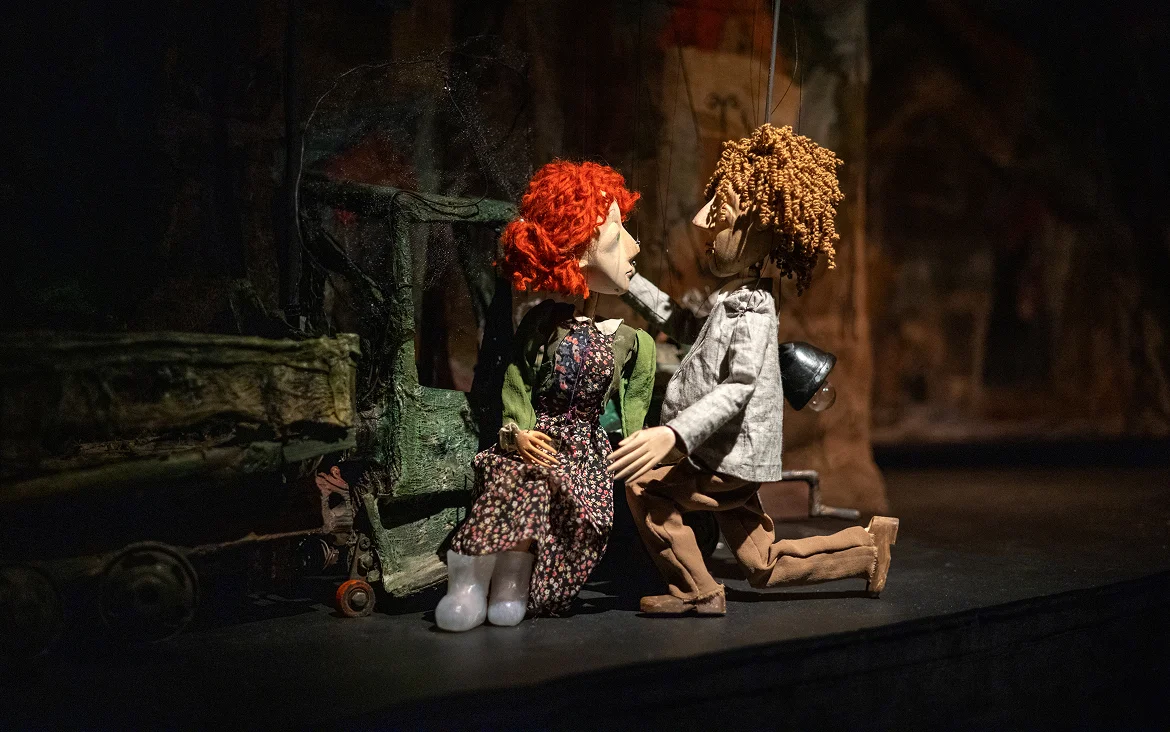
Dance: the Diaghilev inheritance, and a local one
The dance programme has a similar hidden order. Three of its four evenings descend from one man's decision, just over a century ago, to take Russian ballet out of the imperial theatres and put it on tour — and the fourth is the reason there is a company in Baku to dance with at all. Les Ballets de Monte-Carlo's LAC at the Heydar Aliyev Palace is the direct heir: Monte-Carlo was where Diaghilev's Ballets Russes made its home, and where the modern model of the touring company was effectively invented — the model this festival now uses. Jean-Christophe Maillot's reading of Swan Lake strips the fairy tale back to its psychological armature: desire, doubling, the seduction of one's own shadow. The season also marks 150 years since Swan Lake first reached the stage.
And the inheritance runs to the last night of this festival as well. As a student Diaghilev took composition lessons from Rimsky-Korsakov, who told him plainly that he had no talent for it; two decades later the Ballets Russes made its name on Scheherazade, the 1910 production whose colour and abandon set the company's whole idea of the East. The piece that closes here on 8 November is the one that made Diaghilev's fortune, written by the man who told him he would never be a composer.
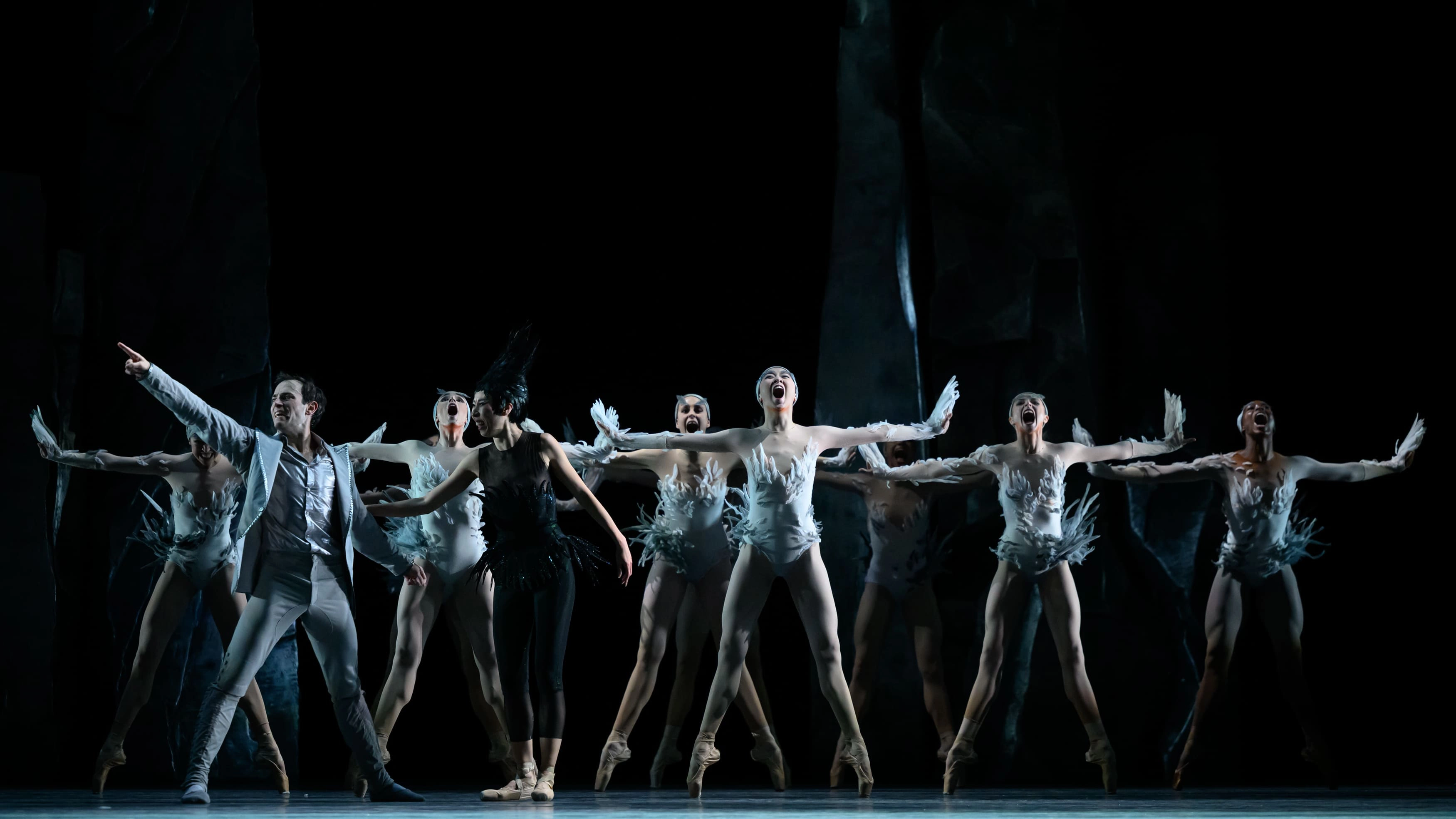
English National Ballet's Masters in Motion marks the company's first performance in Baku, and its double bill is two branches of the same tree. William Forsythe took Balanchine's neoclassicism — itself Petipa filtered through Diaghilev's company and exported to New York — and pulled it off its axis; Playlist (EP) turns that technique loose over house and soul tracks. Crystal Pite came up through Forsythe's Frankfurt Ballet; Body and Soul (Part 1) turns a corps into a single breathing organism and asks what a group of bodies knows that an individual doesn't.
 in The Forsythe Programme © Photography by ASH_дубликат1-2.jpg)
 in Body & Soul © Photography by ASH.webp)
Akram Khan's Thikra: Night of Remembering at the Academic National Drama Theatre comes from the other direction, and lands on the festival's own theme. It is co-authored with the Saudi artist Manal AlDowayan, who represented her country at the 2024 Venice Biennale, as visual director; commissioned by a land-art programme in the AlUla desert, it premiered under the open sky in 2025, and it is billed as Akram Khan Company's final touring production, danced by an all-female ensemble bridging Bharatanatyam and contemporary movement. Kathak, the form Khan himself trained in, carries traces of the cultural traffic between Indian and Persianate court traditions, which makes it particularly resonant in a festival devoted to encounters across the Silk Roads. Thikra — the word is remembrance, from the same Arabic root as dhikr, the ritual of repeated invocation — stages memory as something a group performs together rather than something an individual owns.
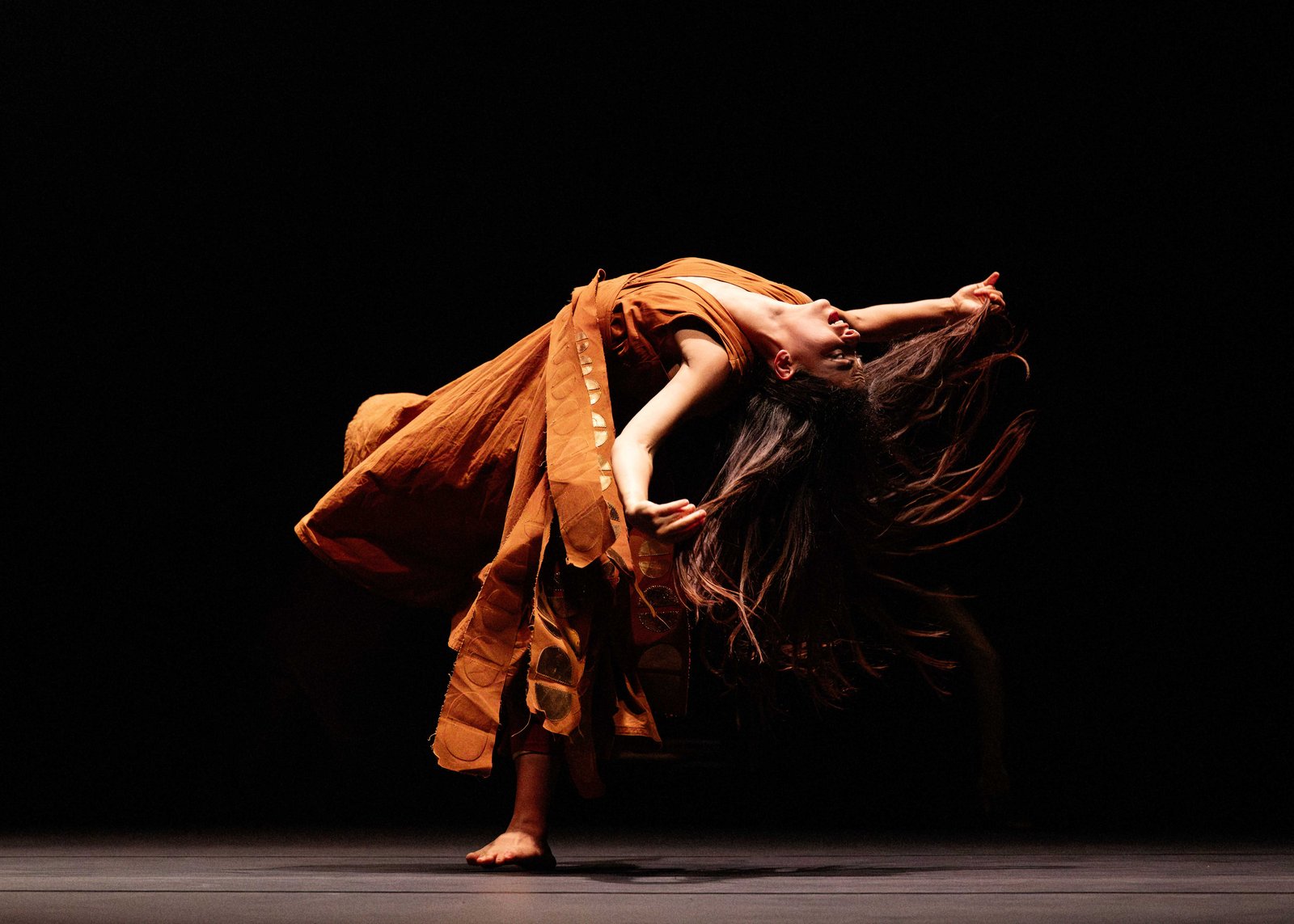
Shahar Binyamini's New Earth / Bolero X is the deepest local investment of the edition, and it quietly completes both lineages. Binyamini brings his own company as the core of the piece and then opens it up: he casts dancers from the Azerbaijan State Academic Opera and Ballet Theatre and the Baku Choreography Academy, works with them himself, and places them inside his ensemble rather than beside it. What arrives is not a sealed touring company, but a production into which the city itself has been written. That company exists because Azerbaijani ballet was built in the middle of the last century — Afrasiyab Badalbeyli's Maiden Tower in 1940, the first ballet composed in the Muslim East, then Garayev's Seven Beauties in 1952, danced to music by Shostakovich's own student.
And the music they will dance to closes the other circle: Ravel wrote Boléro for Ida Rubinstein, who came out of Diaghilev's orbit. Seventeen minutes, one phrase, one crescendo — a machine of accumulating obsession whose logic is not far from mugham's own: stay inside the mode, and let intensity do the work that harmonic movement does elsewhere.

The audience the festival wants
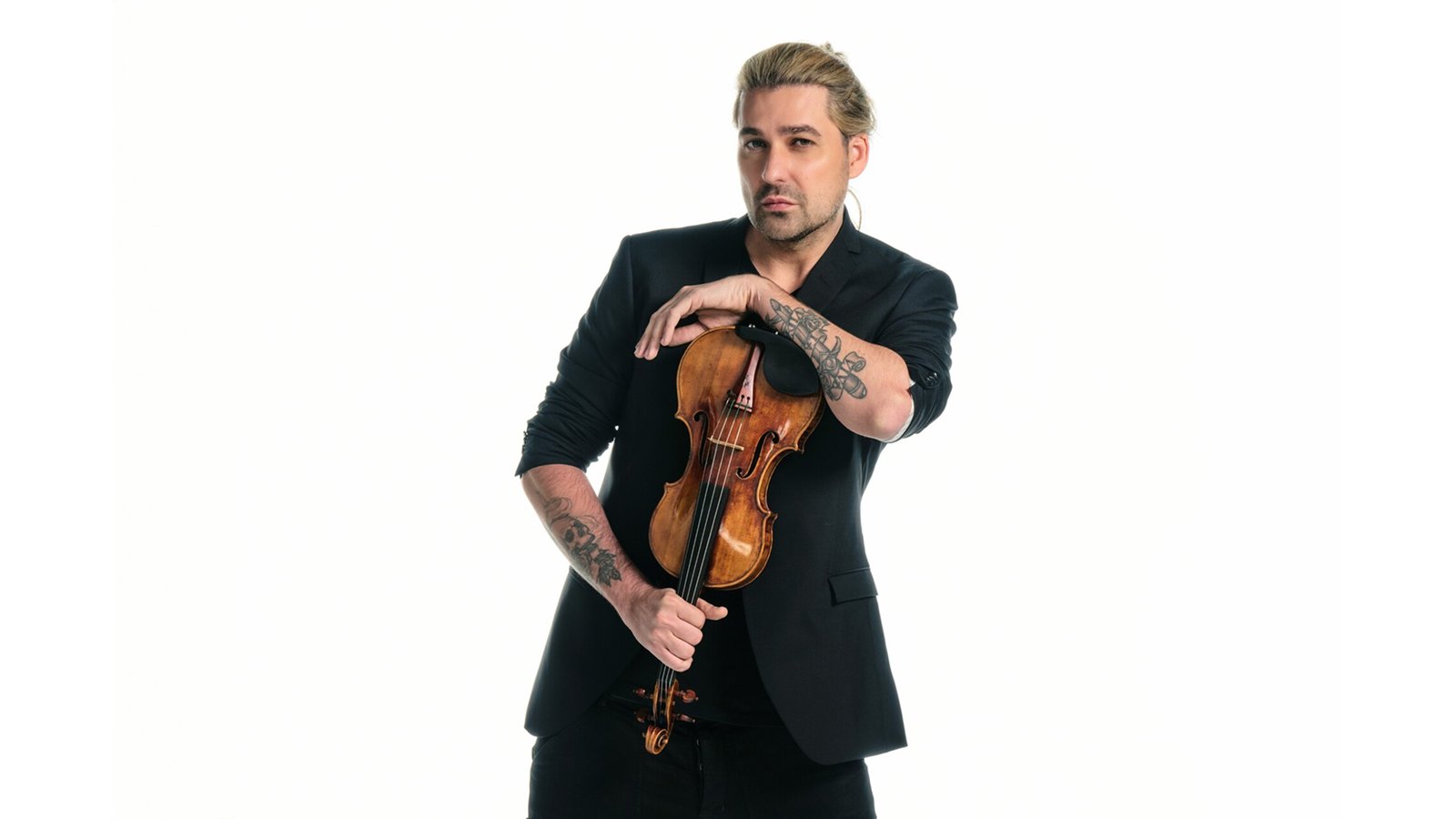
David Garrett's Millennium Symphony at the Heydar Aliyev Center is not an outlier in this programme. It is a statement about who the programme is for. A festival offering only Dodin, Castellucci and Forsythe would be speaking to an audience that already knows it wants them — the few thousand people in any city who read the reviews and book early. Garrett opens another, deliberately wider door into the festival: a Juilliard-trained violinist of the strictest classical formation who has spent his career refusing to choose between the concert hall and the arena, and who fills both. His Baku premiere brings in people who would not otherwise buy a festival ticket, and who will discover, on the same calendar, that Kentridge and Krymov are also available to them.
AISEL's electronic mugham set at the Mugham Club and the open-air cinema, free of the price and the etiquette of a theatre ticket, do the same work at the other end of the programme. The artistic ambition of the core programme remains undiluted; the way into it is deliberately wide. A festival becomes an institution when its audience grows larger than its established constituency.
The parallel programme
Around the core, the collateral programme is where a festival either becomes part of a city's life or fails to. Romeo Castellucci and Scott Gibbons' To Carthage Then I Came is staged at the Museum of Stone Chronicle — a refurbished former Siemens power station, which is exactly the kind of room this work needs. The piece generates its sound from human hair, and engages long-haired performers from each city it visits, so the Baku version will not be the Brussels or Berlin version. The title arrives via Augustine and T. S. Eliot's The Waste Land: a cauldron of unholy loves, an image of the city as furnace.
Sharon Eyal: Work in Progress is an unusually candid piece of programming. Eyal brought Delay the Sadness to Baku last year; this time there is no finished work. Instead: a short film about her, two roughly ten-minute sketches of a piece not due until 2027 or 2028, and a conversation. Audiences are rarely shown the unfinished thing. It is a gesture of confidence in them.
Peter Frankopan's public talk places the whole enterprise in its long frame. Frankopan's The Silk Roads did more than any recent book to dislodge the assumption that world history runs through western Europe and to restore the centrality of exactly this corridor. He will be speaking in one of its capitals, to an audience that lives on it.
The collaboration with Baku Art Weekend is the least coincidental thing on the calendar. Its full name is Fly to Baku. Art Weekend — the first half borrowed from the touring exhibition that carried Azerbaijani contemporary art to London, Paris, Berlin, Rome and Moscow in the 2010s and put the country's artists in front of a European public for the first time.
The festival that grew out of that name is now three days at the start of November, run by the Heydar Aliyev Foundation and IDEA and initiated by Leyla Aliyeva, spread across the Heydar Aliyev Center, the Museum of Stone Chronicle, the National Art Museum, the Shirvanshahs' Palace, the Old City, the seaside park and the commercial galleries: more than forty programmes of exhibitions, installations, performances, talks, masterclasses and studio visits, with Azerbaijani artists — Aidan Salakhova, Faig Ahmed, Farid Rasulov, Vusala Agharaziyeva — shown alongside international names. Agharaziyeva is worth watching for where that scene is heading: a muralist whose three-dimensional work runs across walls in Icherisheher and central Baku, she represented Azerbaijan at the 60th Venice Biennale in 2024 with Pink Planet, and has since moved out to Ivanovka, a village founded by religious settlers three hours from the capital, where she has built a residency and a community for artists.
The two festivals overlap on purpose, and they overlap in the same buildings: Castellucci plays in the Museum of Stone Chronicle, and the Heydar Aliyev Center holds Gabriadze and Garrett while the exhibitions are up. That physical overlap makes the intellectual one obvious. Two of the strongest works in the core programme were made by visual artists moving into performance. Oh To Believe in Another World is not a film about Kentridge; it is a Kentridge — charcoal, torn paper, cardboard maquettes, the studio methods of a draughtsman and printmaker, set against a symphony orchestra. Thikra was built with a Venice Biennale artist as its visual director and commissioned by a land-art programme in the desert. Castellucci trained as a painter and stages his piece in a museum. The border between the gallery and the stage is where a great deal of the last decade's most interesting work has been done, and this festival programmes the border rather than the two sides of it.
The open-air cinema, run with Theatre HD, screens the world's leading opera, concert, dance and documentary productions under the autumn sky — and in doing so picks up a thread this city dropped. Baku has been watching films outdoors since before the revolution, and the names are still remembered here: the Mon Repos, which opened as a summer cinema in 1915 and became the Red East in the 1930s; the Edison, the largest house in the city, which ran a winter hall and a summer one; the Minion, which became the Kram, then the Spartak, then the Araz. And on the seaside boulevard stood the Bahar — the one people still mean when they say open-air cinema here — where Baku spent the fifties and sixties watching Gérard Philipe, Fernandel, Giulietta Masina and Anouk Aimée under the open sky. By the post-war decades the city had some thirty cinemas, winter and summer together, the open-air ones fitted with plain wooden benches while the neighbourhood boys watched free from the trees. The Nizami itself opened with a summer hall among its three auditoria, and gained a rooftop summer screen in 1974 that closed in 1990. Screening opera and dance outdoors in 2026 is not a borrowed European format. It is a Baku habit resumed, with contemporary content.
Alongside these: artist talks with the visiting companies; masterclasses, extending the Binyamini model of exchange rather than display; and city walks on Baku's history, art and architecture, led through the Old City, the oil-boom boulevards and the Soviet and contemporary layers beyond them. And at the Mugham Club, in a restored medieval caravanserai in the walled Old City, AISEL performs a set fusing electronic production with the ethnic and mugham traditions of Azerbaijan — a UNESCO-inscribed improvisatory art form, plugged in, in the room where Silk Road merchants once unloaded.
The venues are the message
Read the venue list on its own and you have a history of the city in eight buildings. A caravanserai built for Silk Road merchants, now holding an electronic set. The Philharmonic Hall of 1912, the oil boom dreaming of Monte-Carlo, and the stage where Shostakovich played his own music in 1952. The Nizami Cinema of 1934–40, the largest picture palace in the Soviet Union when it opened. The Academic National Drama Theatre and the Musical Theatre, the institutions of a national culture that took its modern form in the twentieth century. The Heydar Aliyev Palace, late-Soviet modernism, all concrete confidence. A decommissioned Siemens power station turned museum. And Zaha Hadid's Heydar Aliyev Center, designed by an Iraqi-British architect, built in the Caucasus, recognisable everywhere.
Six centuries and four empires on a single festival pass. The programme is not merely housed in these buildings; it is in conversation with them. Kentridge's cardboard revolution in a Stalinist picture palace. Castellucci's hair-music in a power station. Gabriadze's marionettes inside Hadid's curves. Ravel's Boléro danced by an Israeli ensemble with Baku dancers inside it, trained in a tradition founded on the work of Shostakovich's students.
Closing: the tale continues
The festival ends where it began, at the Philharmonic, with Maxim Vengerov playing the violin solo in Rimsky-Korsakov's Scheherazade — the line that is Scheherazade, the storyteller who survives by ensuring that every night ends in the middle of a story. There is a fitting irony in closing a festival on the Caspian with a St Petersburg composer's imagined East, performed in a city accustomed to answering such imaginings with a reality of its own. A thousand and one nights: the tale continues.
28 October – 8 November 2026. To be continued.